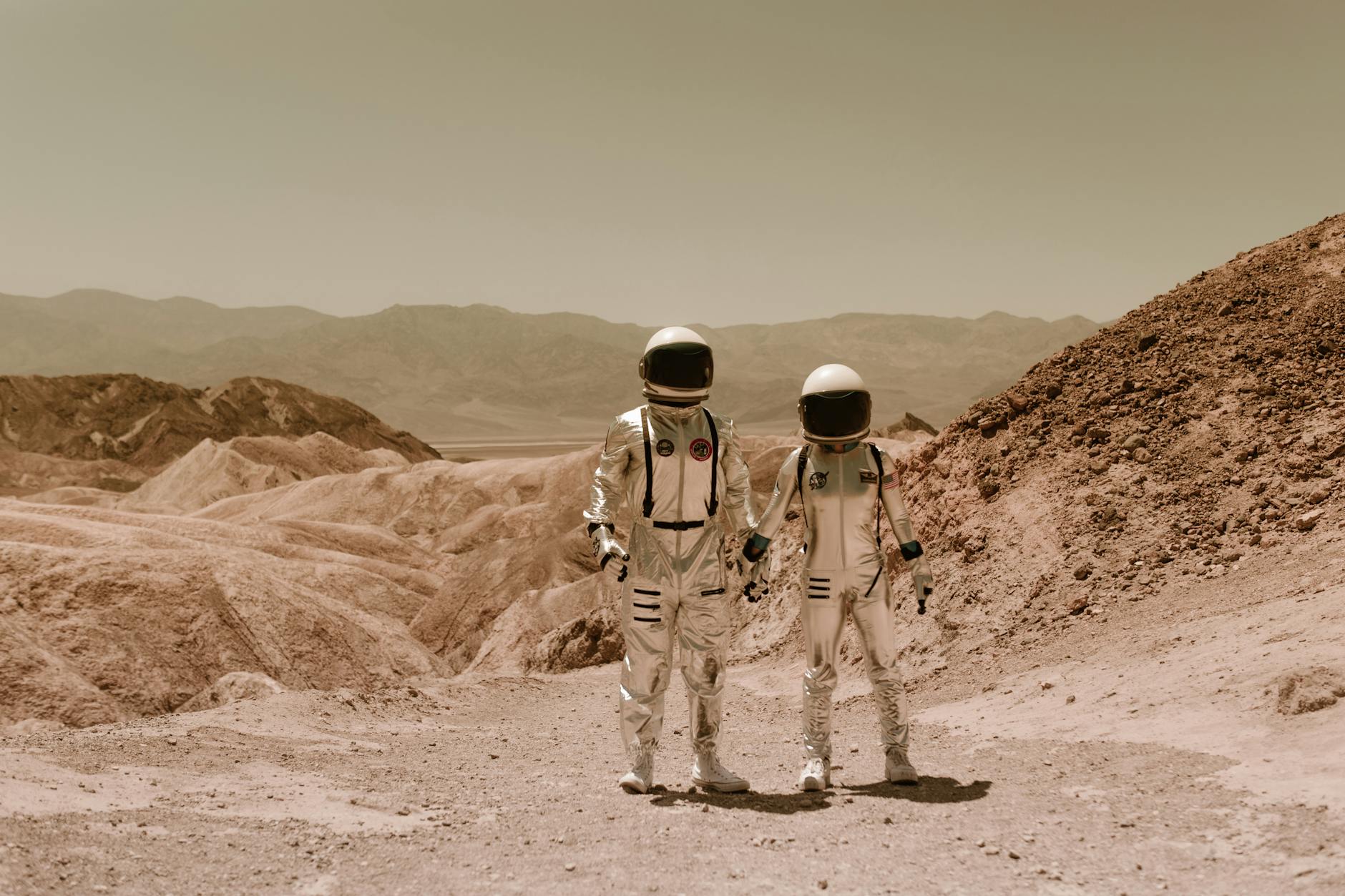
Humanity could undergo a biological transformation that renders future generations born on Mars distinct from their terrestrial ancestors. Biologist Scott Solomon details this shift in his book, Becoming Martian, arguing that the harsh environmental conditions of the red planet will force an evolutionary divergence from the Homo sapiens species.
Earth has shaped human biology over millions of years of evolution. Mars presents a radically different environment defined by 38% of Earth's gravity, extreme radiation levels, and a lack of a protective magnetic field or a comparable biosphere.
The path to a new species
Solomon suggests that if a human population remains isolated on Mars for sufficient generations, they will likely experience allopatric speciation. This phenomenon occurs when a sub-group is separated from the original population and evolves independently to meet the demands of a new environment.
Natural selection will favor individuals with physical traits better suited to Martian life. Solomon points to several potential physiological adaptations, including denser, shorter bones and increased eumelanin production to counter intense solar radiation. He also predicts the development of immune systems tailored to a non-terrestrial ecosystem.
These projections draw on physiological data collected from astronauts aboard the International Space Station. Research in microgravity has already documented significant health impacts, such as muscle atrophy, bone density loss, cardiovascular instability, and even changes in blood chemistry.
Reproduction remains the most daunting hurdle for potential Martian settlers. Scientists do not yet know if human conception, gestation, and childbirth are possible under such extreme conditions without incurring severe medical risks for the fetus and the mother.
Solomon posits that humanity faces a binary choice for its future in space. Colonists could either allow natural selection to dictate the physiological evolution of their descendants or utilize genetic engineering and assisted reproductive technology to force adaptation.
Beyond the technological hurdles of space travel, the colonization of Mars presents profound biological and ethical dilemmas. The prospect of an extraterrestrial branch of humanity challenges our fundamental understanding of what it means to be human.