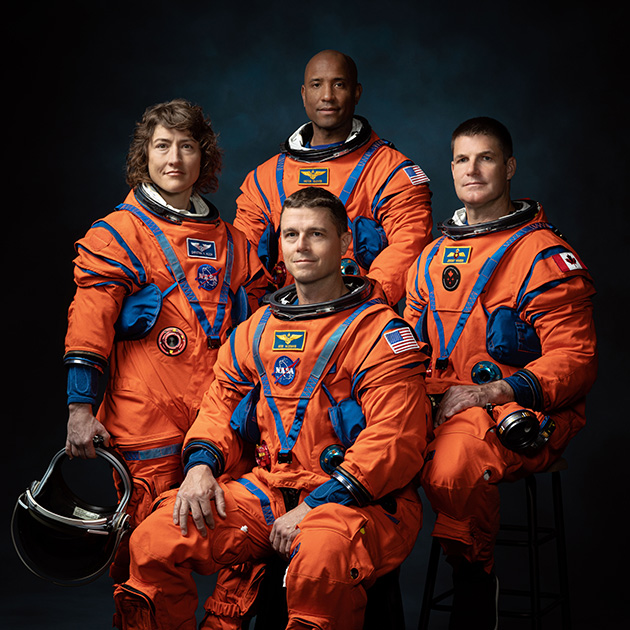
The Artemis II crew officially eclipsed the 54-year-old distance record held by Apollo 13 on Monday, April 6. Astronauts Reid Wiseman, Victor Glover, Christina Koch, and Jeremy Hansen reached a maximum distance of 406,773 kilometers from Earth, according to mission reports.
This feat surpasses the 400,171-kilometer mark set by the Apollo 13 mission in 1970. As of Tuesday afternoon, the Orion capsule—nicknamed "Integrity" by the crew—has cleared the Moon’s gravitational sphere of influence and is using a gravity assist to begin its transit back to Earth.
A historic lunar transit
The mission achieved three critical milestones in the last 24 hours. At 7:25 p.m. EDT on Monday, the crew witnessed an "Earthrise" as the planet appeared over the lunar horizon after their transit behind the moon’s far side. It marks the first time humans have observed this phenomenon since 1972.
While passing behind the Moon, the crew also utilized a solar eclipse to conduct observations of the solar corona without the interference of Earth’s atmosphere. By reaching their furthest orbital point, the four astronauts secured their place in history, traveling more than 6,000 kilometers beyond the previous record established by Jim Lovell and his team.
The Orion capsule is now on a four-day return trajectory. NASA officials have scheduled the separation of the service module for April 10 at 7:30 p.m. The command module is expected to reenter the atmosphere traveling at 40,000 km/h, with a splashdown in the Pacific Ocean near San Diego, California, set for 8:07 p.m. EDT.
This mission serves as the definitive test for the Space Launch System and the Orion capsule. NASA intends for these successful life-support trials to clear the path for the Artemis III mission, which aims to land the first humans on the lunar South Pole in 2027.