A Cold Shoulder from Old Allies
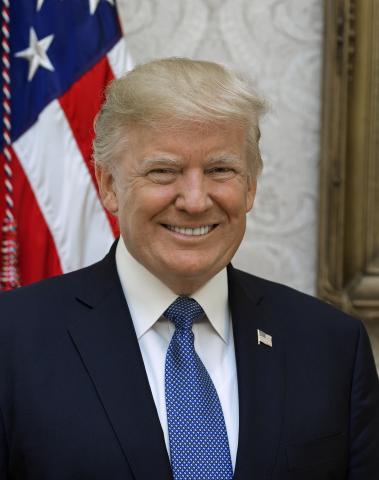
President Donald Trump’s recent efforts to build a global coalition against Iran have met with significant resistance from some of the United States' most steadfast European allies. As tensions in the Strait of Hormuz threaten global energy security, the White House has urged international partners to deploy naval assets to ensure the free flow of oil. However, major European capitals have responded with a unified message: this is not their war.
German Chancellor Friedrich Merz delivered a particularly sharp rebuke to Washington this week, stating that Germany would not participate in military efforts to secure the Strait. Merz expressed deep skepticism regarding the rationale behind the US-Israeli military campaign, noting that Washington failed to consult its allies or present a convincing roadmap for success. "We would have advised against pursuing this course of action as it has been pursued," Merz told German lawmakers.
Strained Transatlantic Relations
This diplomatic standoff highlights the growing friction within the Transatlantic alliance. European leaders are increasingly wary of being drawn into an open-ended conflict defined by what they perceive as opaque objectives. The frustration is compounded by a sense that the US is acting unilaterally, often blindsiding its partners on critical issues ranging from the war in Ukraine to recent shifts in Russian oil sanctions.
French President Emmanuel Macron has been equally firm, explicitly stating, "We are not party to the conflict." Meanwhile, in the United Kingdom, Prime Minister Keir Starmer has faced public scrutiny and direct criticism from President Trump, who recently compared him unfavorably to wartime leader Winston Churchill. Despite this pressure, the British government appears aligned with the broader European sentiment, prioritizing caution over immediate military intervention.
Domestic Pressure and Public Sentiment
European leaders are also navigating strong domestic opposition to the conflict. Public opinion polls across the continent reflect a deep-seated reluctance to engage in another Middle Eastern war. In Germany, a recent ARD DeutschlandTrend survey indicated that 58% of the population opposes the war, while in Spain, 68% of citizens have expressed similar concerns.
Spanish officials have been particularly vocal, with Deputy Prime Minister Maria Jesus Montero declaring that Spain would not act as a "vassal" to foreign interests. Even in the UK, where political parties are typically aligned with Washington, the government has been forced to temper its rhetoric to appease a skeptical public that, according to YouGov data, opposes the strikes by a significant margin.
Seeking an Independent Path
Rather than joining the US-led effort, European powers are exploring independent alternatives to manage the crisis. France is reportedly leading efforts to assemble a security coalition to monitor the Strait of Hormuz, specifically excluding a US role. The goal, according to Paris, is to engage in de-escalation with Iran and coordinate with regional partners, including India and Gulf Arab states, to ensure maritime safety without provoking a wider regional conflagration.
As the EU navigates this period of instability, officials are adopting a strategy of careful management. Kaja Kallas, the EU’s foreign policy chief, noted that the bloc has become accustomed to the unpredictability emanating from Washington. By maintaining a distance from the current conflict, European leaders hope to protect their own strategic interests while weathering the ongoing volatility of the current geopolitical landscape.