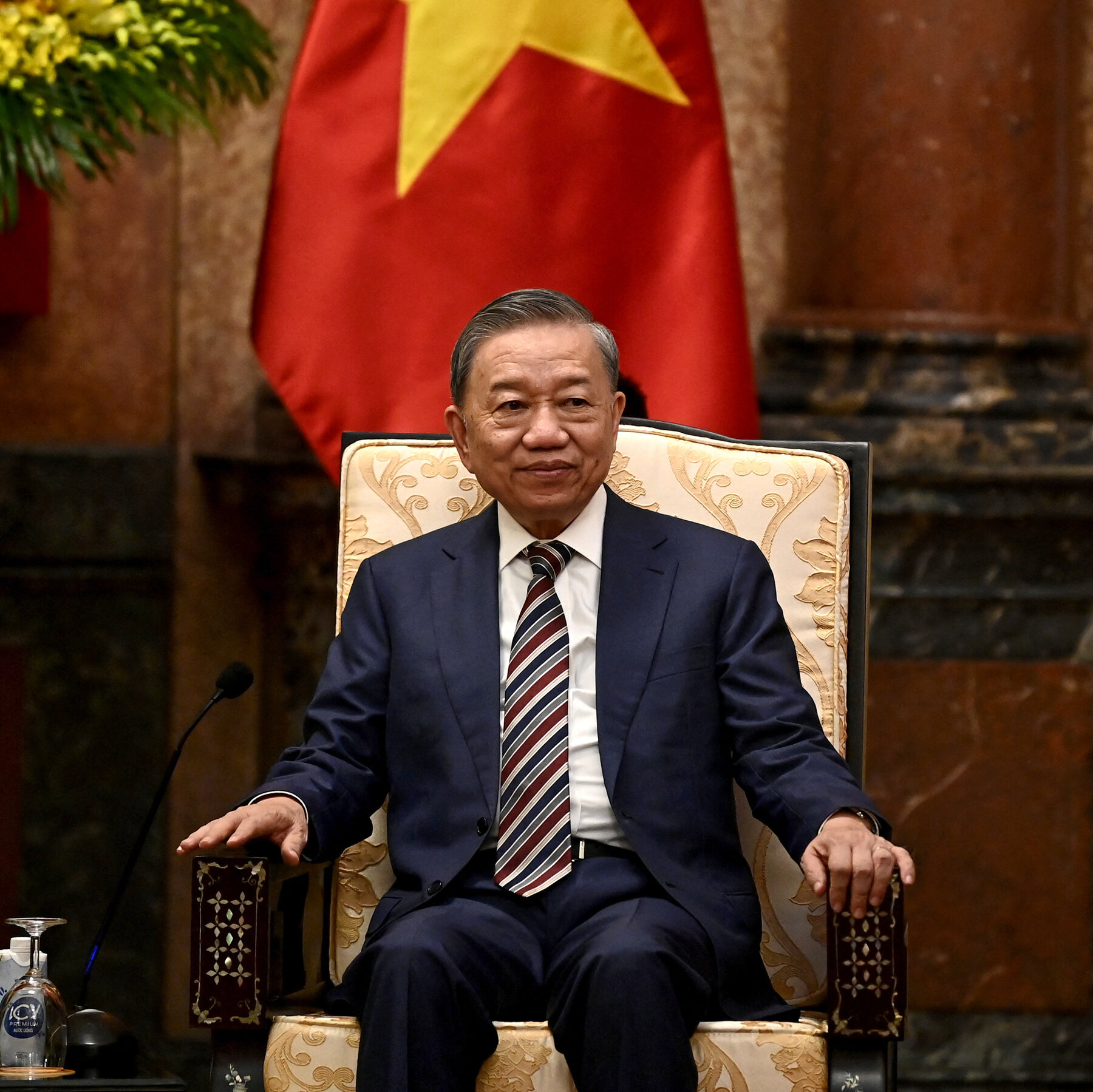
Vietnam’s 500-seat National Assembly unanimously elected party leader To Lam as president this week. The vote grants him control over the state’s two most powerful roles, a shift that deviates from the country's long-standing tradition of collective leadership.
To Lam rose to prominence after serving as Minister for Public Security. In that role, he spearheaded a aggressive anti-corruption campaign that resulted in the removal of numerous political rivals. Following the resignation of former President Vo Van Thuong and the death of long-time party boss Nguyen Phu Trong earlier this year, To Lam assumed both positions on a temporary basis. This week's vote formalizes his dual leadership for the next five years.
A shift in political structure
The Communist Party of Vietnam has historically favored a system of shared power among the “five pillars” of the state. Critics and some elements within the military reportedly expressed reservations about To Lam holding both the general secretary and presidential offices. However, he successfully secured the necessary support to maintain his grip on both posts.
Analysts suggest the move invites comparisons to China, where President Xi Jinping has similarly centralized authority. Beijing has already signaled its approval, with Xi offering to work with To Lam to uphold the “traditional friendship” between the two socialist neighbors.
Despite the concentration of power, some experts argue the party’s internal structures still act as a safeguard. Carl Thayer, an Emeritus Professor at the University of New South Wales, noted that To Lam remains accountable to the 19-member Politburo. “To Lam is the first among equals, but he’s also answerable to the Politburo,” Thayer said. He added that the president has demonstrated a clear ability to build coalitions within the party ranks.
To Lam now faces the challenge of delivering on aggressive economic promises. He has pledged to transform Vietnam into an upper-income country within two decades, setting a target of 10% annual economic growth. His administration plans to continue the “blazing furnace” anti-corruption initiative while implementing sweeping reforms to modernize the economy. Whether these measures can overcome current global economic uncertainty remains the primary test for his unified leadership.