Ukrainian forces have launched a coordinated campaign of drone strikes against Russia’s most critical energy infrastructure, hitting major export terminals on both the Baltic and Black Seas. The attacks, which occurred over the last several days, aim to cripple Moscow’s ability to fund its ongoing war effort through the disruption of oil export revenues.
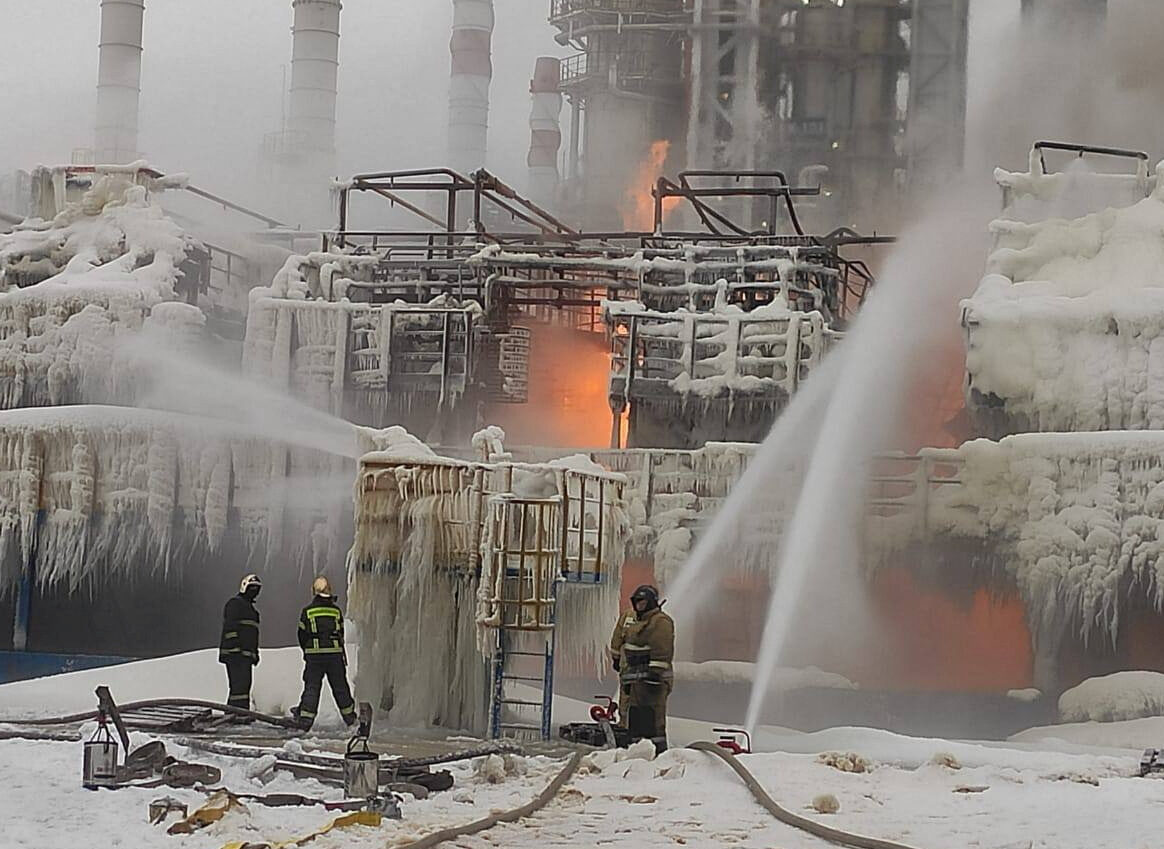
In St. Petersburg, residents reported the persistent smell of burning chemicals following strikes on the city’s primary oil terminals. These facilities handle nearly 40 percent of Russia’s seaborne oil exports, according to data from the International Energy Agency.
Further south, the port of Novorossiysk became a primary target. Ukrainian drone forces commander Robert Brovdi confirmed that the operation targeted the Admiral Makarov missile carrier docked at the Black Sea hub.
Russian military officials reported intercepting 148 drones over a three-hour window. Despite these defenses, verified footage shows significant fires at the port’s docks, and authorities in Novorossiysk confirmed that debris caused damage to residential areas and injured at least eight people, including two children.
The strikes also impacted the Caspian Pipeline Consortium (CPC) terminal, a vital facility that exports oil from Kazakhstan and counts major U.S. firms like Chevron and ExxonMobil among its shareholders. The Russian Ministry of Defence accused Kyiv of a deliberate attempt to inflict economic damage on international investors.
“The Kyiv regime deliberately attacked facilities of the international oil transportation company Caspian Pipeline Consortium in order to inflict maximum economic damage on its largest shareholders – energy companies from the United States and Kazakhstan,” the ministry said in a statement.
Escalating sabotage concerns
While the drone campaign targeted southern and northern ports, the Kremlin also turned its attention to energy security in Europe. Russian officials announced on Monday that it is "highly likely" that Ukraine planted explosives near a gas pipeline in Serbia that supplies Russian fuel to Hungary.
While the Kremlin admitted there is currently no conclusive evidence, they stated they expect to find proof of Ukrainian involvement in the coming days. These developments occur as Moscow struggles to maintain export levels following recent U.S. sanctions waivers granted to ease global energy supply constraints.
For residents in Russia’s second city, the war is no longer a distant conflict. Konstantin, a 53-year-old St. Petersburg resident, described the atmosphere as the smell of burning crude and fuel has permeated the air over the last two weeks. The strikes represent a shift in the conflict’s geography, moving the physical and economic costs of the war directly into the heart of Russia’s industrial centers.