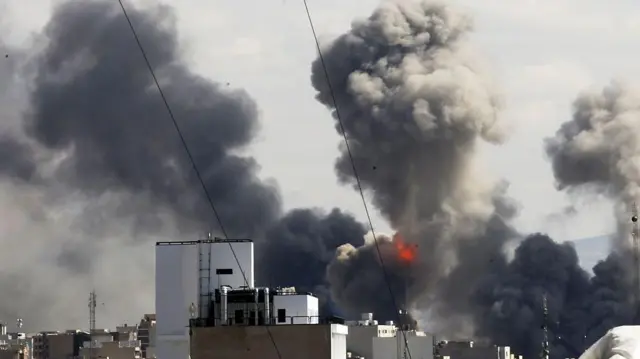
Iranian military forces claimed on Friday to have downed two United States combat aircraft in separate incidents, marking a significant escalation in the ongoing conflict in the Persian Gulf. State broadcaster IRIB reported that an A-10 aircraft was struck by air defense systems and crashed into the Persian Gulf near the Strait of Hormuz. Earlier that day, local authorities in the Kohgiluyeh and Boyer-Ahmad province reported the downing of another U.S. fighter jet. Following the latter incident, the Iranian government issued a public appeal for assistance in capturing the pilot and crew, offering a reward for information.
These reports arrive as tensions reach a breaking point. Former President Donald Trump has issued an ultimatum to Tehran, setting a Tuesday deadline to reopen the Strait of Hormuz or face military consequences. The Islamic Revolutionary Guard Corps (IRGC) has defied the threat, stating that the Strait will “never return to former state” for U.S. or Israeli vessels. In a separate strike, an Iranian missile hit the Israeli port city of Haifa, resulting in at least four injuries.
Global economic fallout and the mechanics of war
While the military situation intensifies, the war’s reach is impacting daily life for civilians thousands of miles away. In Vietnam, gig workers are struggling with a sharp spike in fuel costs. Nguyen, a motorcyclist who operates through the ride-hailing app Be in Ho Chi Minh City, reported that half of his daily earnings are currently consumed by petrol expenses. “I drove for around seven or eight hours, making around 240,000 Vietnamese dong ($9.11) and then I paid 120,000 Vietnamese dong ($4.56) on petrol,” Nguyen told Al Jazeera.
Scholars are now analyzing the structural incentives fueling the broader conflict. David Keen, a political economist specializing in conflict, argues that wars often persist because they serve economic interests and political survival rather than military objectives. According to Keen, conflict can become functional for those in power, with factors like sanctions, smuggling, and increased military spending creating a cycle that is difficult to break. He suggests that the primary challenge facing international observers is finding a way to make peace more profitable than the ongoing hostilities.
Meanwhile, the information space surrounding the war is tightening. U.S. satellite firm Planet Labs recently announced a blackout on imagery related to the conflict, limiting public visibility into the theater of operations. As the Tuesday deadline approaches, the possibility of a wider regional conflagration remains high, with both sides entrenched in their respective positions.